Decision Intelligence Interface for Engineering Leaders (24 hrs challenge)
- Team
- • Product designer • Software engineer
- Role
- • UI/UX design • Front-end development
- Timeline
- • 24 hours
- Project
- • Software Hackathon
- The constraint
- A two-person team with just 24 hours to understand the problem, research, conduct interviews, design, build, and demo. That constraint pushed us toward fast, decisive calls in building the product.
Problem
Emma is a CTO at a company with 3,000+ engineers, and her day is packed with nonstop work: deployments, incidents, infrastructure, AI tools, and keeping up across tools like GitHub, Jira, Slack, and others, along with hundreds of projects, all overlapping at once. The problem was never a lack of data, but the absence of a tool that tells her what truly matters right now, or what to do about it. This fragmentation makes tracking and keeping up with problems a heavy task.
Solution
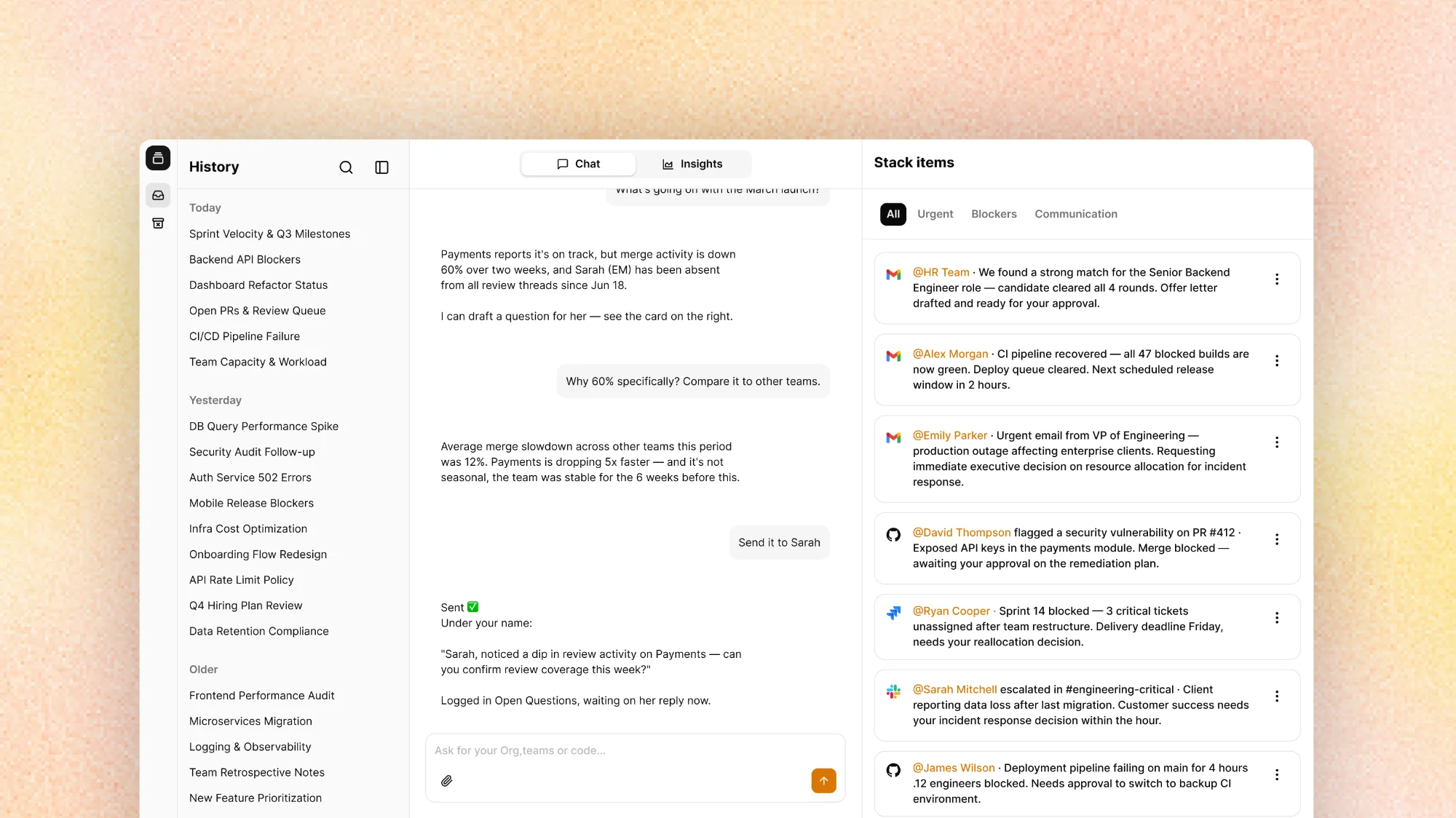
We built a single interface that works on Emma's behalf, not another tool for her to operate. It gathers the scattered signals from dozens of tools, shows her only what matters to her right now, explains why it matters, then lets her take the appropriate action from the same place, with her approval before anything executes. to be the one place from which Emma runs her day.
Impact
❶ Flagged issues land in her stack ❷ She opens them and sees the cause and evidence ❸ She selects one of the suggested actions ❹ They run through the source tool, and the items close
What was the solution direction?
Our first direction was to build a dashboard, since it felt like the most obvious solution for a product built for CTOs. However, after researching how CTOs actually spend their day, we realized the problem goes far beyond tracking metrics. Their work is constantly spread across pull requests, team communication, architecture decisions, infrastructure, security, and production. This kind of workflow simply doesn't fit inside a traditional dashboard. Instead, we designed the experience around a unified stack items powered by an AI chat, allowing CTOs to see everything happening in one place while still having access to analytics and charts whenever they need them, rather than making dashboards the center of the product.
Connect Your Tools and Define What Matters to You
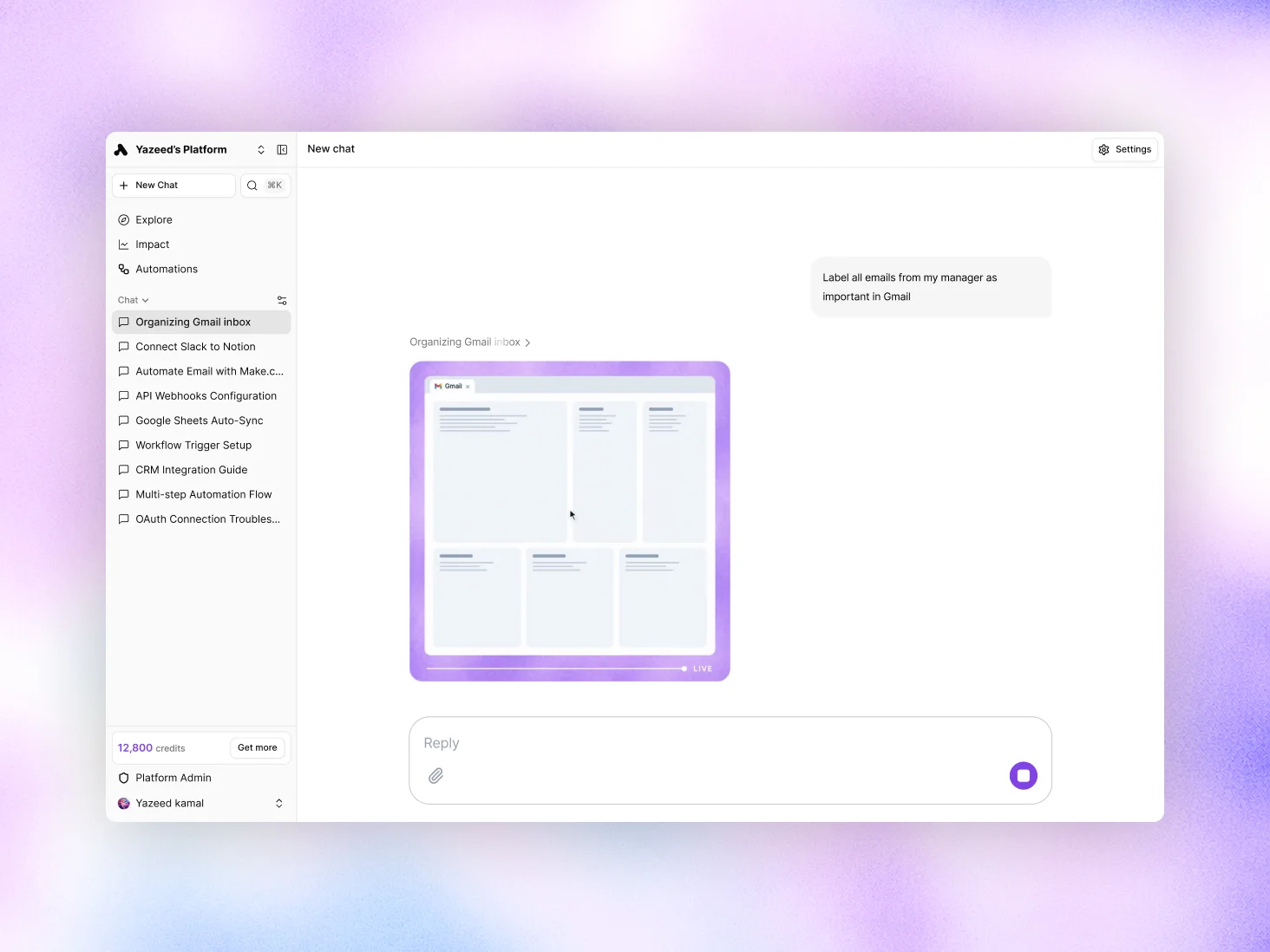
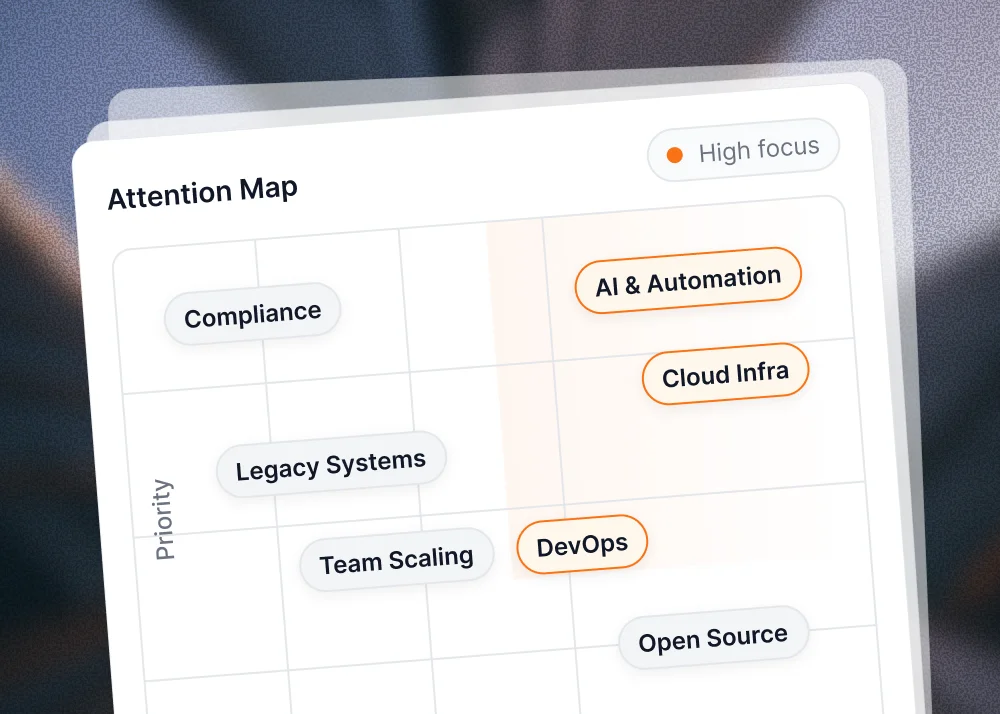
Connect the tools you already use, then tell the AI what matters most to you. Whether it's security issues, a specific project, or updates from a particular team, the AI uses your priorities to decide what to monitor and what to bring to your attention.
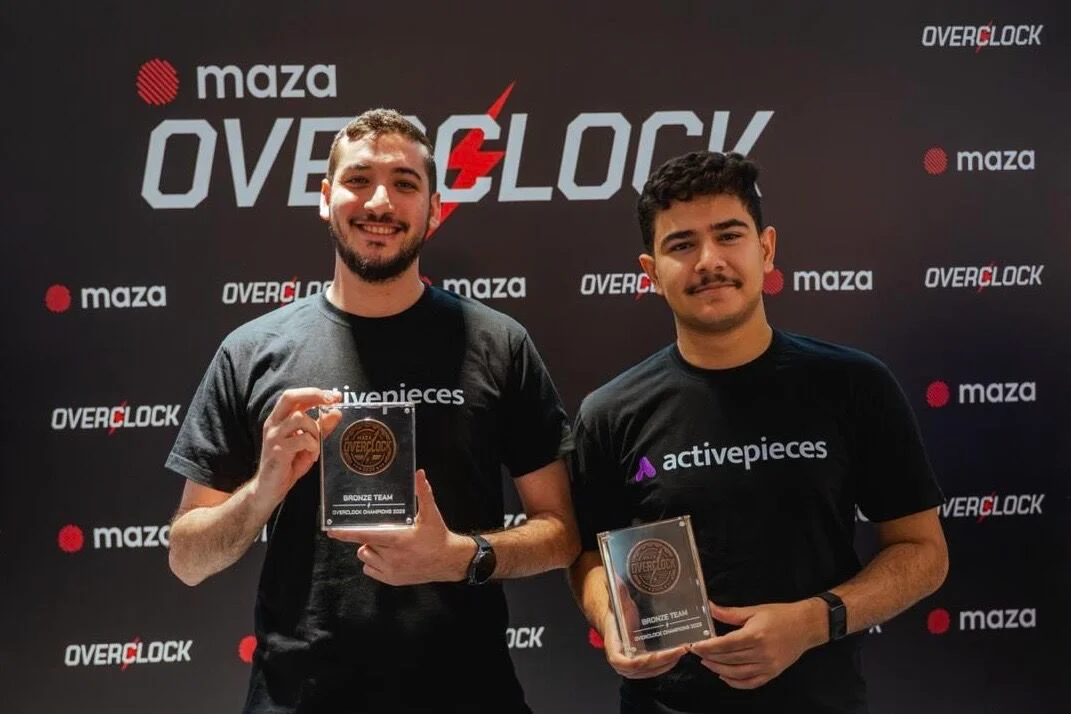
We won. 🏆
Twenty-four hours, two people, one idea, and at the end of it, we walked away with third place over 10 teams. But honestly, the prize wasn't the best part. The best part was watching it click: a real problem landing in Emma's stack, her reading it, choosing an action, approving it, and watching it resolve, all without ever leaving the screen. That moment proved the whole bet we'd made from the start: engineering leaders don't need another dashboard to stare at. They need decisions handed to them. And in one sleepless day, we showed it could actually work.